Trends-Yes or No?
Design Trends-Yes or No?
A Professional Decorator’s Perspective
It’s TRENDS month at The Decorating & Staging Academy. Quite frankly, if you’ve spent any time on Instagram, Pinterest, or design websites lately, you’ve probably noticed everyone is talking about trends. After all, it’s that time of year that the design industry is creating a buzz via to-the- trade only markets around the country, new catalogs, and of course social media.This year’s trends include things like color drenching and layered lighting to warm minimalism and natural textures.Bottom line, it seems there’s always something new being promoted as the next big thing in design. But here’s the question professional decorators and stagers need to ask: Should we follow trends…yes or no?
The clear concise answer…Maybe!
The truth is that trends can be incredibly helpful — when you understand how to use them wisely. Let’s start with understanding why design trends exist.
1.Design trends don’t just appear randomly. They are a powerful marketing tool to get you to open your wallet! After all, if there is nothing motivating you to shop, that doesn’t bode well for commerce. In today’s world, our access to social media serves as a constant reminder of what our neighbors, influencers, trendsetters, etc. are doing. This sets up for which sets us up for an ongoing cycle of FOMO.(fear of missing out)
2.Trends are a reflection of shifts in lifestyle, culture, technology, and how people want their homes to feel. The trend setters spend a great deal of time exploring what has changed in the world and how to address that decor wise. After all, who would have thought 20 years ago, you would be hanging a TV on a wall or pulling out your carpet.
3.People get tired of same old, same old. Change is rarely new but simply a cycling of things that have gone before...maybe with a twist. Warm earth tones gave way to cool gray interiors, and now we are cycling back to a look that reflects warmth and comfort, leading the way to warmer color palettes and wood tones again.
4.Trends reflect how we live in our homes. For example, who would have thought that in 2021, almost 28 million people would be working from home. Covid unleashed its fury which led to the realization that open concept floor plans were not conducive to private work spaces, resulting in the trend of "broken" floor plans with glass and drywall walls creating a space within a space...just like the old days.
Bottom line, trends often reveal how people want or need to live right now, with a nod to those creature comforts that make a house a home. That’s valuable information for decorators and stagers. It also gives those of us in the industry job security.I always tell my clients, you are never really done decorating your home.
Now that we have established why trends can be good, let’s talk about the problems with being trend driven. We’ve all seen it happen. A trend explodes in popularity, everyone rushes to copy it, and suddenly every home looks the same and soon feels dated.Just think about some prior trends like:
Tuscan kitchens
Honey oak cabinets with crown molding
Chevron patterns everywhere
Gray floors in every home
And yes, the white kitchens we see everywhere
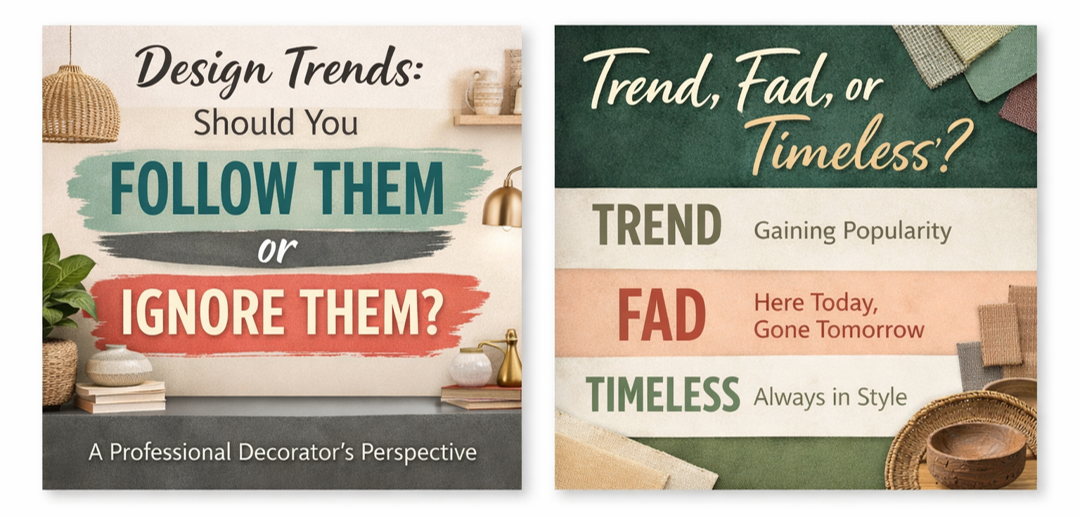
Once the hallmark of a well-designd space, now they indicate a very clear design era as well as limit our design abilities, as we are locked into “a look.” That’s why professionals need to approach trends differently than consumers. You need to understand the difference between trends, fads, and classic, timeless design, that still allows your client to achieve a home that is a personal reflection of them. Let’s talk about the differences.
Trends-Something gaining momentum and reflecting current lifestyle shifts. (think quartz vs granite, or wood, laminate, and vinyl floors vs. tile or carpet)
Fads-A motif or décor item that you can almost pinpoint to a certain 2-year time but proved to have some function problems (think barn doors) or simply was everywhere…fast. (think word art)
Timeless Design-Elements that consistently work year after year because they are rooted in good design principles. (think warm wood tones or classic leather armchairs)
Smart Decorators rarely design an entire room around a trend. After all, you don’t want your design projects to look like everyone else’s. Use trends thoughtfully and in mind of how they can mix and match with classic design elements.This approach will allow a room to feel fresh and current without requiring a full redesign every few years. Trends should always enhance a room — not control it.Add fads for a bit of tongue in cheek in ways that can be easily replaced.
FAD-Use in easily replaceable elements, such as pillows, inexpensive wall art, or even a paint finish (Remember sponge painting)
TREND-Artwork and decorative objects that you want to have more staying power.
TREND-Color palettes in paint or wallpaper that refresh your space with lasting power.
TREND-Lighting fixtures with more organic shapes and multiples.
FAD or TREND-Smaller furniture pieces or accent chairs in a trendy fabric.
Understanding trends is important for professionals, because your clients are paying attention to them. In fact, they sometimes pay attention to them more than we do. Think about it.
Homeowners often share inspiration photos they’ve saved from Pinterest or Instagram.
Staging clients want their homes to feel current and appealing to buyers.
They probably watch the decorating shows on HGTV and other platforms more than you do.
Knowing which trends matter — and which ones don’t — allows you to guide clients confidently, whether staging or decorating. This knowledge positions you as the Expert and not just someone iwth a good eye for decorating. Your goal is to create a design that feels current with lasting power. At The Decorating & Staging Academy, we believe great design is about balance. You aren’t trying to chase every trend but understand how to implement trends that will improve the way your clients live.