
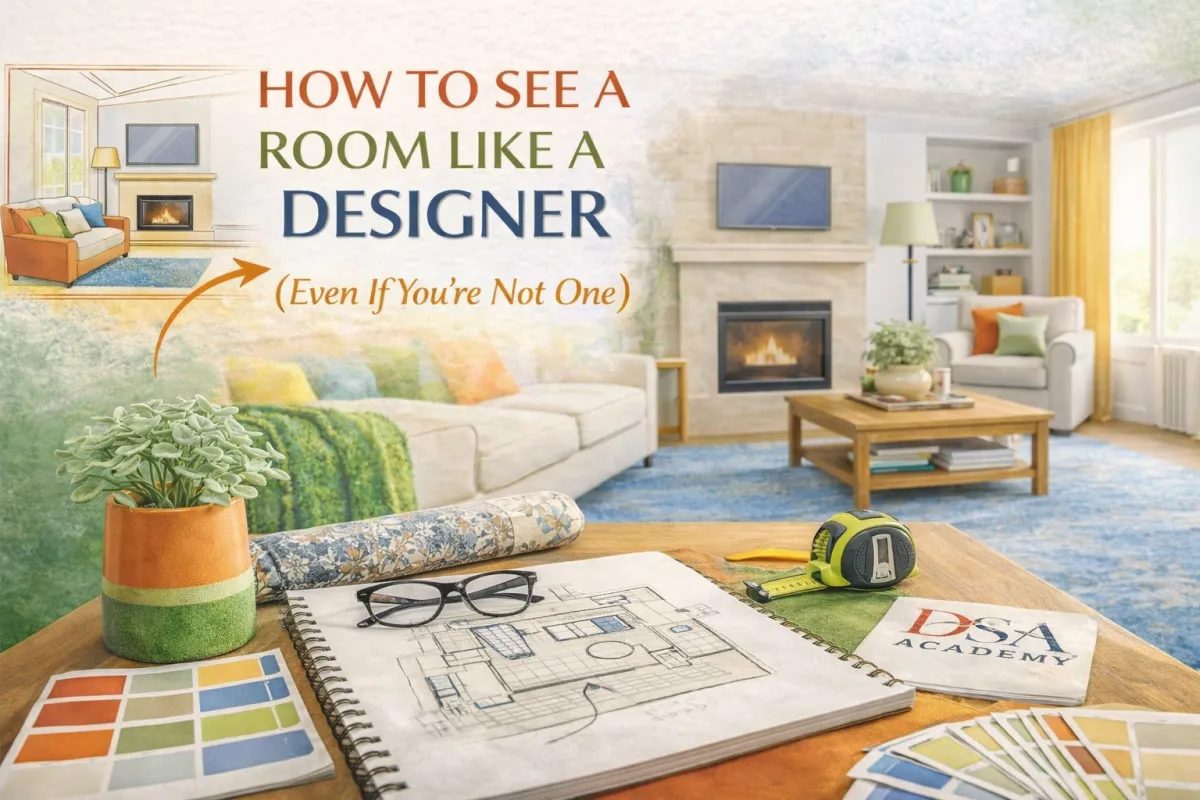
5 Things Decorators & Designers Notice First in a Room
When a professional Decorator or Designer walk into a space, they don't react emotionally first. They begin with analyzing structure, flow, and visual relationships. The important thing to keep in mind is all of these things impact the emotion of the room, which is as important as the aesthetics.
Here's the top five to help you assess your space with a more critical eye.
1. The Focal Point (or Lack of One)
The first question a designer asks is:
👉 “What is this room about?”
Every successful room has a clear visual anchor, something that naturally draws the eye and organizes the space.
Common focal points include:
Fireplaces
Large windows or views
Statement furniture pieces
Feature walls or artwork
When a focal point is missing—or when multiple elements compete for attention—the room can feel scattered or unresolved.
Professional Tip:
Designers don’t just identify the focal point—they reinforce it through placement, scale, lighting, and surrounding elements.
2. Furniture Placement & Functionality
Before color, before accessories—designers evaluate how the room works.
They’re asking:
Does the layout support conversation or function? (keep conversation zone within 6')
Is there a logical flow through the space? (comfortable traffic lane is 36")
Are pieces floating without purpose? (does the chair have a table?)
A room can have beautiful furnishings and still fail if the layout is off.
Professional Tip:
Good placement creates:
Clear pathways
Defined zones
A sense of intention
This is often where the biggest transformation happens—without purchasing a single new item.
3. Balance & Visual Weight
Designers are constantly assessing balance, which is much broader than symmetry or asymmetry.
Instead, they look at visual weight, which is influenced by:
Size and scale
Color depth (dark vs. light)
Texture and density
Horizontal and Vertical (Our Decorating Zone concept addresses this)
For example:
A dark, heavy piece on one side of a room needs visual counterbalance
Too many small items can feel cluttered, while oversized pieces can overwhelm
Bring the eye up in the room to use the entire space, not just the footprint.
Professional Tip:
Balance is what makes a room feel settled.
When it’s off, even a little, the space can feel uncomfortable without an obvious reason.
4. Repetition & Cohesion
One of the most overlooked principles in decorating is repetition. This keeps the eye moving around the space
Designers instinctively look for:
Repeated colors (repeat a color 3 times, at different heights, to make it belong)
Consistent shapes or lines (curved, linear, angular) (you inherently have a favorite shape or pattern, don't overdo it)
Materials that appear more than once (think texture and pattern)
Without repetition, a room can feel like a collection of unrelated items, even if each one is beautiful on its own. Amateurs often decorate by creating a series of vignettes, professionals (or those who understand the concept) understand the room needs to create a cohesive whole.
Professional Tip:
Cohesion isn’t about matching,
it’s about intentional consistency and interesting inconsistencies.
5. Layering & Depth
Finally, designers assess whether a room has dimension.
They’re looking for layers such as:
Lighting at various levels (watch your Kelvin Degrees)
A mix of textures (soft, smooth, reflective, natural)
Depth created by placement of art and accessories
Professional Tip:
Layering is what elevates a space from not only looking good, but feeling good. It adds the finishing touches that make a room feel loved and not just stuff.
Bringing It All Together
What’s important to understand is this:
👉 Designers and Decorators aren’t guessing.
They’re evaluating a space while keeping the client needs and wants in mind.
Attention to these five elements will lead to more confident and interional decorating decisions.
Focal Point
Placement
Balance
Repetition
Layering
…the more confident and intentional your decorating decisions will become.
Join us at the April 28 Design Boardroom, our monthly free webinar for those who love decorating. Register Here.
Can't make the live, check out recordings on You Tube.
At The Decorating & Staging Academy, we train both aspiring and established decorators to move beyond instinct and into informed, professional-level decision making. Ready for a deeper dive, start with our Color and Design Principles Course, on sale now for only $150, regular $295.